
Editorial Production
Editorial Production

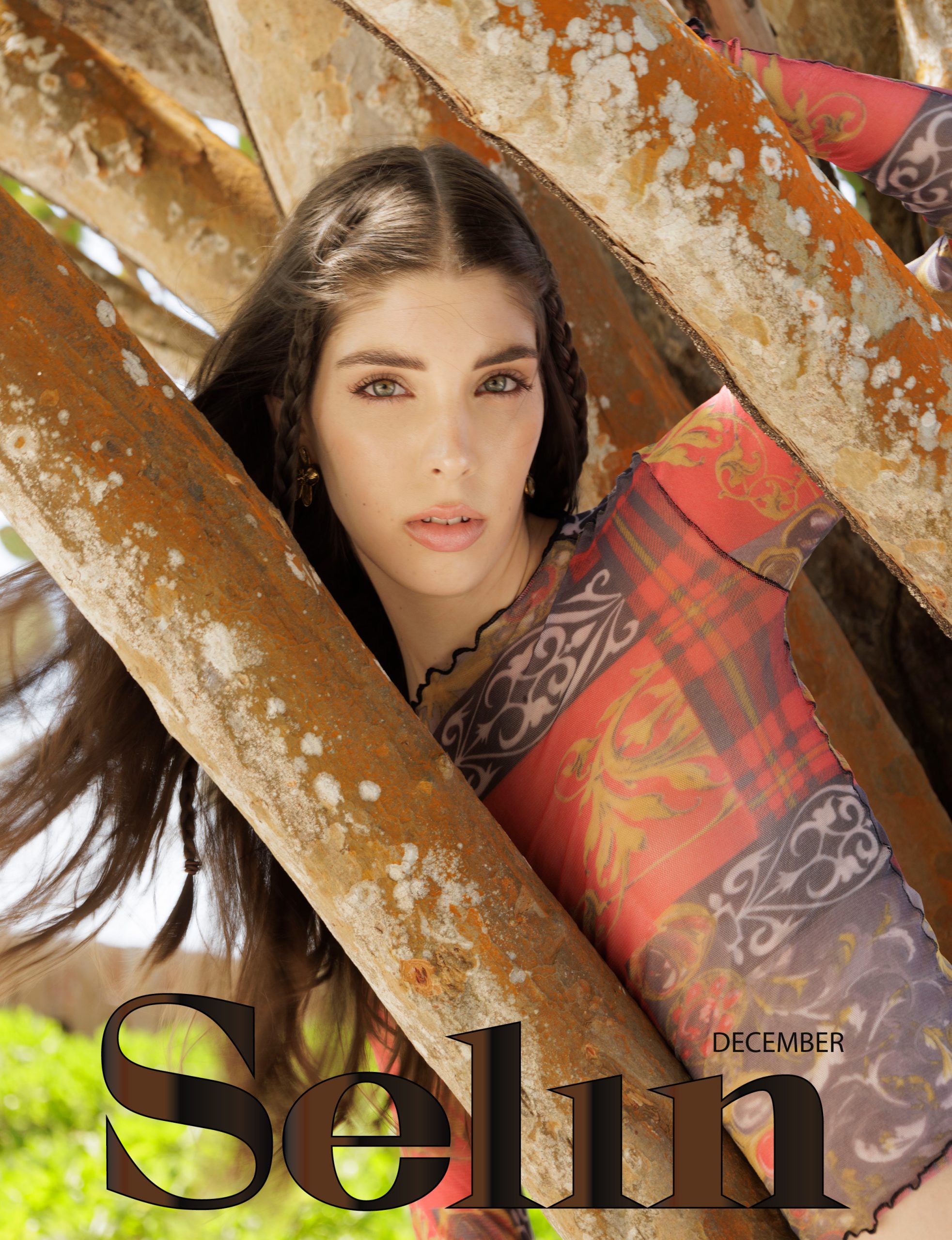
Producing for editorial, like producing for a theatrical release film, or an event, or a book, is about understanding the parameters, and laying out a story before shooting for it.
We create the framing – space for the written word, direction which the eye follows, and we have done this for years based on print publishing for books and magazines.
Editorial content was to present the perspective of a publication, and “editorial view.”
Editorials presented a perspective of values, and culture which could be told in image, or written form. It provided a deeper and more complex understanding of who people were, what an industry, or culture valued, and the nuances framing the discussion.
Images illustrated, or demonstrated, greatness, beauty, design, accomplishments and told of artists and craftspeople behind the objects of desire.
Simple images, snapped and grabbed, are often “on the spot,” but they can’t replace the depth, breadth, or meaning of the editorial story.

What is “story?”
A story takes us to a place, a time, something, somewhere, that we haven’t seen, but we recognize. We can recognize the feeling, the thoughts, the emptiness, the fullness, the wonder, the love, the unity, and because we recognize those core elements,
We will stay to hear or see or feel more.
Editorials brought people into the room. Magazines were created to pull people into a world where they would be receptive and open to new and wonderful ideas and perspectives that they hadn’t considered before.
It created the TIME for people to see and feel.
Publications like Life, and National Geographic, and Vogue had people who spent lifetimes honing the craft of storytelling, and deciding which images could tell the story best, and how many thousands of images never made it.
Here, on the site of Phillip Wong Productions, we have editorial stories that have drawn audiences to publications, and luxury brands, ideas and introductions, allowing well crafted advertising to address their audiences.
Elsewhere, we have written about concepts of marketing and sales: Engaging audiences, introducing complex and sophisticated styles emerging from historical backgrounds, and activating those audiences while growing intelligent followings.

Editorial work creates the context that allows the appreciation of the most complex and sophisticated of products and services.
Obviously, poorly conceived and executed editorial is simply thrown out, without thought, and the success of any product or service associated with it, is equally limited in scope.
That is the competition we face. That is the world we live in. Everyone is a photographer, a model, a videographer, a content creator, an actor – but we present a difference.
Less is more. Form follows function.
The elements of design echo the simplicity and understanding of the mind. It is seen in fashion, in beauty, in architecture, art, and in the people who create.
There are only 24 letters in the English language. We have the same access to those 24 that Shakespeare had, but it doesn’t make us Shakespeare. But if we understand this, we can try to get close.


Intersections: Artists working with Artists - Collaborations
Phillip Wong Productions
Non-Profit/Political/Portrait
INTERSECTIONS:
Artists Working with Artists – Collaborations
In our world, we interpret “political,” or “non-profit,” or “for-profit” in very specific ways. The fact is, our world is fluid, evolving, and our own work, has the ability to influence the world, to be closer to something that is fair, logical, equal, just, and gives us a viable future.
Many people believe that the world is too big, too vast, for US to have an impact on it, but we always believe that the world, has an impact on US. These ideas have elements of truth.
In a capitalist and commercial world, there are many artists who are extremely talented and accomplished, but might not be known. In a capitalist and commercial world, getting “known” is expensive and often difficult. I have always known this.
This is not a criticism of commercialism, but an understanding that there is more than what is marketed, and what is “hot” or “big” at this time. As any artist learns, greatness, is not always achieved in a lifetime. And as the world learns, what is “hot” today, may not always be great.
But using photography to draw attention to those who deserve a little more scrutiny, and trying to show “WHY” they deserve more, has been a passion of mine.
Working with artists, is understanding their art, their personalities, and collaborating with them to create visual images that complement and reflect the emotions and passions within them.
I realized that I was successful in fashion, not solely because of MY talent, but because I understood what designing was, and what mattered to fashion designers. I understood what mattered to editors and models.
But I came back from Europe, because in the fashion centers, they didn’t have a vast array of OTHER creative fields. I wanted to feel the energy of collaborating with passionate and driven people.
My production work is wide-ranging, because the artists and characters and people are wide-ranging. Who people ARE, are often, what people DO. And what they Think, and what they Feel.
The collaboration works because the GOAL, is what we work for – and to be part of that success – is what we can take pride in.
Tuu Ra – Extraordinary

Steve Coleman – Drop Kick
 https://youtu.be/ZnH7z1Ek-P4
Steve Coleman – The Tao of Mad Phat
Steve Coleman – A Tale of 3 Cities

(The Modalities of Rhythm)
M-Base Collective- An Anatomy of A Groove
 https://youtu.be/ol8acY0QpVY
Tuu-Ra – Cycles

Tamara Nekola

Steve Coleman And the Metrics – Tale of 3 Cities
Faces - Emerging, Evolving, Establishing
Phillip Wong Productions
Photography
Faces – Emerging, Evolving, Establishing
Faces reflect the perceptions and experiences behind eyes. Without knowing it, we read character, heart, thought, memories and spirit, as well as emptiness, behind every expression.
I’ve photographed people for various reasons, some for myself, some for them, some because of a magazine and a project . . . often, people want to “look like . . . ” but because they have their own journey, their own experiences and the thoughts they’ve learned, merge with experiences they’ve had, the camera captures each face differently.
I am intrigued by the urgency of today, but the timelessness of where we exist. We believe that we are different than anyone else, and we are . . . . but we are also very much the same, as others who came before us. I look for that in faces.


Caushun
Phillip Wong Productions
Photography/Publishing
Caushun
Caushun is a gay rapper who wanted to come out, when the Hip Hop community wasn’t receptive to gay rappers.
He was as bold and brash and “in-your-face” and talented, and this was his voice was black, street and gay.


Red Shoes Diary - Brigitte Bako
Phillip Wong Productions
Photography/Publishing
Red Shoes Diary
Brigitte Bako
Brigitte Bako was in Red Shoes Diary which was being directed by Zalman King. I was being asked to shoot with some of the female stars by their publicity unit and get them into multiple publications. I met her at one of New York’s boutique hotels as she was doing a promotional tour.
Our team of stylist, makeup artist and hair stylist prepped her so that we would be able to release multiple sets for multiple publications – but the look had to be cool, sexy, elegant, and reflect the character she had been playing in this new series.


Javier Bardem
Phillip Wong Productions
Photography/Publishing
Javier Bardem
I worked for a number of small independent publications that were writing about films and music that were new, ambitious, under-explored.Their focus converged with my own interest in newly discovered or emerging artists.
Javier Bardem was in Before Night Falls when I was asked to photograph him to support the interview which was being written.


Charlize Theron
Phillip Wong Productions
Photography/Publishing
Charlize Theron
When I originally photographed Charlize Theron in Milan, I was introduced to her by the make-up artist I was working and traveling with at that time Christan Burran, who wanted me to meet and shoot with Charlize.
We spent the next day shooting, and when I got back to New York, Gear Magazine recognized her as an emerging artist.
I later was asked to produce a short book based on that shoot which I designed, laid out, and produced.


Blues Musicians
Phillip Wong Productions
Photography/Media
Blues Musicians
When I was in Italy, I proposed a overview story of Blues Musicians to editors at Italian Vogue. I didn’t necessarily think that it would have an angle at Italian Vogue, but L’Uomo Vogue, Vanity or one of their smaller publications might have an interest.They turned it down, because they didn’t see how it could be produced.
Believing that this niche story had value, I flew back to Chicago, where my family was still living, and for three weeks, photographed and interviewed Buddy Guy, Otis Rush, Koko Taylor, Lefty Dizz, Junior Wells, Sugar Blue, Lonnie Brooks, Son Seals, Sunnyland Slim, and then back in Italy, as I was finishing the writing, Albert Collins and B.B. King in Pistoia. My interviews were wide-ranging and free-flowing touching on how their music and the musicians they met, guided their lives, framed their views on race, and war, and society and relationships.
Producing the finished interviews and photographic story, Conde Nast picked it up as they tried to decide which one of their publications would run with it.


Gear Magazine
Phillip Wong Productions
Photography/Media
Gear Magazine
Gear Magazine was a publication that emerged when Maxim and FHM made their way over from Britain and their explosive success revealed latent markets in America.
Gear was different, but couldn’t brand itself differently. Gear was started by Bob Guccione, Jr. who had launched Spin Magazine earlier, and who’s father had brought Penthouse to America from Britain.
Edgy, offbeat, but serious about a new crop of artists, actors, musicians, emerging and defining a new culture, Gear recognized my informal, direct and honest approach matched their perspective with my photographs of Angelina Jolie and Charlize Theron, and brought me onboard. They asked me to pitch personalities and story proposals.
As I saw how they developed layouts, graphics and content, I quickly saw the potential in his vision.
But they couldn’t keep up the financing, marketing, or production necessary to continue competing with Maxim, FHM, GQ or Esquire at the same time, technology was changing digital publishing.


German Playboy - Jeff Koons - Martina Moculescu
Phillip Wong Productions
Photography/Media
German Playboy – Jeff Koons – Martina Moculescu
The first time I returned from Europe, I was contacted in New York by German Playboy to shoot a scene with the Playmate of the Year and work with Jeff Koons.
I had been in Europe when Koons was becoming notorious for his work with his wife, Ilona Stadler.
He had a studio in a building on Broadway and Houston, and I agreed to work with him and a crew of people German Playboy had assembled. Koons had pitched an idea to the editors who wanted his name involved based on postcards of two paintings: Jean Honore Fragonard’s Girl Playing With A Dog, and Francois Boucher’s Resting Girl. He loved the lushness of the 1700s ambiance, and I was looking at focusing on Martina Moculescu, whom I had just met, but as a Playmate of the Year, I thought the qualities that made her special, should be brought out.
I loosely followed Koon’s desire for lushness, and the framework of the artwork on these postcards, and produced the three images here. (She was also shot by two other photographers in other countries.)
A number of years later, Jeff Koons came out with his “Gazing Ball” collection which used the Boucher painting, and then a collection which featured “Pot Rack” in which my photograph of Martina, based on Fragonard’s painting, was the foundation behind the Koons painting.
I thought the dog was lost behind a flurry of pans.


